



Industrial Equipment Basics: The Complete Beginner’s Guide

Introduction: Why Understanding Industrial Equipment Matters
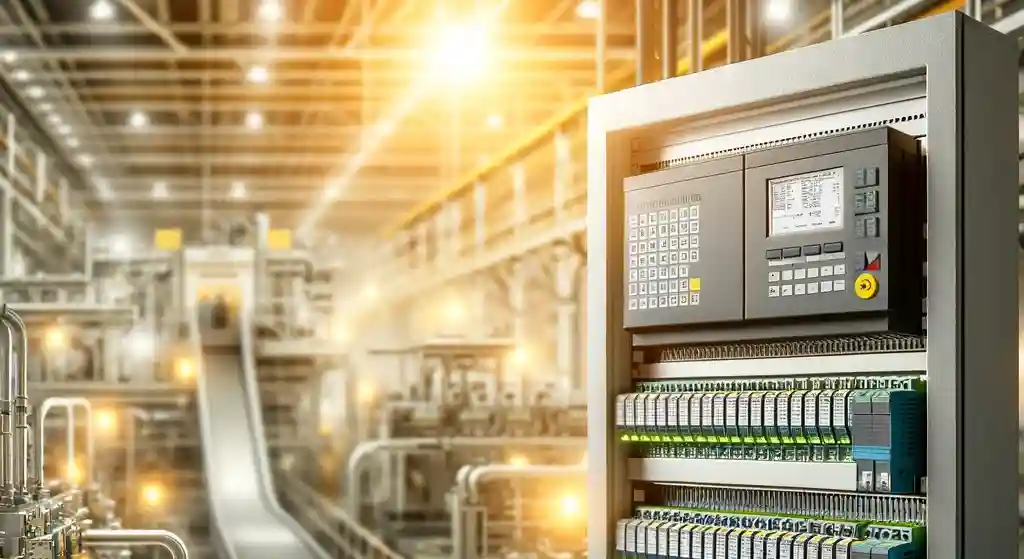
Walk into any factory, power plant, water treatment facility, or chemical processing unit and you will find hundreds of instruments, sensors, controllers, and electrical devices working silently in the background — measuring, controlling, and protecting every aspect of the production process.
For factory owners, procurement managers, new engineers, and operations staff, understanding what these devices are and what they do is the first step toward making smarter decisions about your facility.
This guide, brought to you by Analytical Industrial Solution — Chattogram’s trusted industrial equipment supplier — breaks down the most important categories of industrial equipment in plain, easy-to-understand language. No engineering degree required.
Part 1: Process Instrumentation — Measuring What Matters
Process instrumentation is the collective term for all the devices used to measure physical parameters inside an industrial process. Think of it as the “senses” of your factory — just as humans use eyes, ears, and touch to understand the world, your plant uses instruments to measure flow, pressure, temperature, level, and more.
What is a Flow Meter?
A flow meter is a device that measures how much liquid or gas is flowing through a pipe at any given moment. This measurement is critical for managing raw materials, utilities (water, steam, compressed air), chemical dosing, and billing.
Why it matters: If you do not know how much water, fuel, or chemical is flowing through your system, you cannot control costs, ensure product quality, or detect leaks.
Types of flow meters we supply:
Electromagnetic Flow Meter (Mag Meter) — Works by generating a magnetic field around the pipe and measuring the voltage created by conductive liquid flowing through it. Best for water, wastewater, slurries, and any conductive liquid. Has no moving parts, so it is very reliable and low maintenance.
Vortex Flow Meter — Measures the frequency of vortices (swirling eddies) created as fluid flows past a bluff body inside the pipe. Ideal for steam and compressed air measurement in factories and power plants.
Thermal Mass Flow Meter — Measures how much heat a flowing gas carries away from a heated sensor. Specifically designed for compressed air and gas flow measurement. Very accurate at low flow rates.
Ultrasonic Flow Meter — Uses sound waves to measure flow velocity. Available in clamp-on versions that attach to the outside of the pipe without any cutting or welding — perfect for retrofitting existing pipework. Suitable for all types of water and liquid.
Coriolis Mass Flow Meter — Measures the actual mass of fluid flowing, not just volume. The most accurate type of flow meter available. Used for high-value fluids like HFO, diesel, chemicals, and food-grade liquids where precise mass measurement is critical.
Rotameter — A simple, mechanical flow meter with a float inside a tapered tube. The float rises higher as flow increases. Inexpensive and easy to read, used for low-flow applications.
Flow Switch — Does not measure flow rate but simply detects whether flow is present or absent, triggering an alarm or control action if flow stops.
What is a Pressure Transmitter?
A pressure transmitter is a device that measures the pressure of a liquid or gas inside a pipe or vessel and converts that measurement into an electrical signal (typically 4-20mA) that can be read by a control system or display.
Why it matters: Pressure monitoring is critical for process safety, pump and compressor control, filter monitoring, and leak detection.
Types of pressure measurement:
Gauge Pressure — Measures pressure relative to atmospheric pressure. The most common type.
Absolute Pressure — Measures pressure relative to a perfect vacuum. Used in vacuum systems and barometric applications.
Differential Pressure — Measures the difference in pressure between two points. Widely used for filter monitoring (to detect when a filter is blocked) and for calculating flow rate using orifice plates.
Hydrostatic Pressure — Uses the weight of liquid above the sensor to calculate the level of liquid in a tank. A very common and cost-effective level measurement method.
Brands we supply: Siemens, Emerson, WIKA, Supmea, ABB, Baumer, Yokogawa, BD Sensors, OMEGA, Klay Instruments.
What is a Temperature Sensor and Transmitter?
A temperature sensor detects how hot or cold something is and converts that into an electrical signal. In industrial applications, temperature measurement is essential for process control, safety monitoring, and energy management.
Types of temperature sensors:
Thermocouple (TC) — Made of two different metals joined at one end. When heated, a small voltage is generated that corresponds to the temperature. Very robust, works at extremely high temperatures (up to 1700°C), and inexpensive. Slightly less accurate than RTDs.
RTD (Resistance Temperature Detector) — Works by measuring how the electrical resistance of a metal (usually platinum) changes with temperature. More accurate than thermocouples, ideal for precise process control in food, pharmaceutical, and chemical applications.
Temperature Transmitter — Converts the signal from a thermocouple or RTD into a standard 4-20mA signal for transmission to a control system over long cable distances without signal loss.
Bi-metallic Temperature Gauge — A simple mechanical gauge that shows temperature on a dial. No power required. Used for local indication in boiler rooms, HVAC systems, and pipe networks.
Infrared (IR) Temperature Gun — A handheld device that measures surface temperature from a distance using infrared radiation. Essential for electrical maintenance (checking hot connections), mechanical maintenance (checking bearing temperatures), and furnace monitoring.
Thermal Imager — An advanced camera that shows a heat map of a surface. Used for preventive maintenance to find hot spots in electrical panels, motors, and refractory linings before they cause failures.
What is a Level Sensor?
A level sensor measures how full a tank, vessel, or silo is — detecting the level of liquids, powders, or bulk solids.
Types of level sensors:
Ultrasonic Level Sensor — Sends an ultrasonic pulse downward and measures the time it takes to bounce back from the surface of the liquid or solid. Non-contact measurement — the sensor never touches the product, making it ideal for corrosive or hygienic applications.
Radar Level Sensor — Similar to ultrasonic but uses microwave radar signals instead of sound. More accurate and works in dusty, vaporous, or high-temperature environments where ultrasonic signals are unreliable. The most advanced non-contact level technology available.
Capacitance Level Switch and Transmitter — Detects level by measuring the change in electrical capacitance between a probe and the tank wall as the product level rises or falls. Works for both liquids and solids.
Vibronic Point Level Switch — A probe that vibrates at its natural frequency. When liquid or solid covers the probe, the vibration changes, triggering a switch output. Used as a high or low level alarm.
Differential Level Transmitter — Uses two pressure transmitters at different heights on a tank to calculate the level from the pressure difference. Suitable for pressurised tanks and vessels.
What is Liquid Analysis?
Liquid analysis instruments measure the chemical properties of liquids — particularly critical in water treatment, effluent treatment, chemical manufacturing, food and beverage production, and pharmaceutical processes.
Key liquid analysis parameters:
pH — Measures how acidic or alkaline a liquid is, on a scale of 0 (most acidic) to 14 (most alkaline). Essential for water treatment, chemical dosing, and food processing.
Conductivity — Measures the ability of a liquid to conduct electricity, which indicates the concentration of dissolved salts or ions. Used to monitor water purity and chemical concentration.
Dissolved Oxygen (DO) — Measures the amount of oxygen dissolved in water. Critical for biological wastewater treatment processes and aquaculture.
Chlorine — Monitors chlorine levels in water disinfection systems.
COD (Chemical Oxygen Demand) and BOD (Biochemical Oxygen Demand) — Measure the amount of organic pollution in water. Required for ETP (Effluent Treatment Plant) compliance monitoring.
Part 2: Control Systems & Automation
What is a PLC (Programmable Logic Controller)?
A PLC is essentially a specialized industrial computer designed to control machinery and processes automatically. It reads inputs from sensors and switches, executes a user-written program, and controls outputs like motors, valves, and alarms — all in real time, reliably, and without human intervention.
A simple example: Imagine a water pump that must turn on when a tank level falls below 30% and turn off when the level reaches 80%. A PLC connected to a level sensor and motor starter can do this automatically, 24 hours a day, without anyone pressing a button.
Why PLCs replaced traditional relay panels: Before PLCs existed, industrial control systems were built from hundreds of physical relays wired together in complex panels. Changing the control logic meant physically rewiring the panel — a time-consuming and expensive process. A PLC replaces all of those relays with software. To change the logic, you simply modify the program on a computer and download it to the PLC.
PLC brands we supply: Siemens, Mitsubishi, Omron, Allen-Bradley, Delta, Invt, Kinco.
Key PLC components: – CPU (Central Processing Unit) — The brain of the PLC that executes the control program – Input Modules — Receive signals from sensors, switches, and instruments – Output Modules — Send signals to motors, valves, alarms, and actuators – Power Supply — Provides regulated power to all PLC components – Communication Modules — Allow the PLC to communicate with other PLCs, HMIs, and SCADA systems
What is an HMI (Human Machine Interface)?
An HMI is the touchscreen or display panel that allows operators to monitor and control an automated process in real time. Think of it as the dashboard of your factory — showing live readings from all sensors, status of all equipment, and allowing operators to adjust setpoints and respond to alarms.
What operators can do on an HMI: – See live flow rates, temperatures, pressures, and levels – Start and stop pumps, motors, and conveyors – Adjust process setpoints (e.g., desired temperature or pressure) – Acknowledge and respond to alarms – View historical trends and data logs
Modern HMIs are typically colour touchscreens ranging from small 4-inch panels on individual machines to large 21-inch screens in central control rooms.
What is SCADA (Supervisory Control and Data Acquisition)?
SCADA is a software system that provides centralised monitoring and control of an entire plant or facility — potentially across multiple buildings or even multiple sites. While a PLC controls a single machine or process unit, SCADA gives management and engineers a bird’s-eye view of the entire operation.
What SCADA does: – Displays real-time data from all PLCs and instruments across the plant – Logs all process data historically for trend analysis and reporting – Manages alarms centrally — operators see all alerts from one screen – Generates production reports automatically – Can allow remote monitoring from management offices or mobile devices
The difference between PLC, HMI, and SCADA: The PLC controls the process automatically. The HMI is the local operator interface for one section of the plant. SCADA is the plant-wide supervisor that connects everything together.
What is a DCS (Distributed Control System)?
A DCS is similar to SCADA but is specifically designed for continuous process industries like oil refineries, chemical plants, and power generation facilities. In a DCS, the control functions are distributed across multiple controllers located near the equipment they control, rather than being centralised in one PLC. This provides higher redundancy and reliability for processes that cannot be interrupted.
What is a VFD (Variable Frequency Drive)?
A VFD, also called an inverter or variable speed drive, is an electronic device that controls the speed of an electric motor by varying the frequency of the electrical power supplied to it.
Why this matters enormously for energy savings:
Most electric motors in factories run at a fixed speed — either fully on or fully off. But many applications (pumps, fans, compressors, conveyors) do not always need to run at full speed. A pump filling a tank, for example, might only need to run at 60% speed most of the time.
When a motor runs at 60% of full speed using a VFD, it uses only about 22% of the energy it would consume at full speed. This is because motor power consumption follows the “cube law” — small reductions in speed produce very large reductions in energy use.
Real-world impact: In many Bangladeshi factories, VFD installation on pumps, fans, and compressors alone reduces the electricity bill for those systems by 30–50%. The investment typically pays for itself within 6 to 18 months.
VFD brands we supply: Siemens, Yaskawa, Schneider Electric, Danfoss, Invt, Panasonic.
Related drive products: – Soft Starter — Gradually ramps up motor speed on startup to reduce mechanical stress and electrical inrush current. Less flexible than a VFD but more economical where speed control is not needed. – Servo Drive — A precision drive system used for exact position and speed control in robotics, CNC machines, and packaging equipment. – DC Drive — Controls the speed of DC motors, still found in older industrial equipment.
Part 3: Sensors & Transmitters
What is a Proximity Sensor?
A proximity sensor detects the presence or absence of an object without making physical contact with it. It produces a simple on/off (digital) output signal.
Types of proximity sensors:
Inductive Proximity Sensor — Detects metallic objects by generating an electromagnetic field. When a metal object enters the field, it changes the field and triggers the sensor output. Very common in conveyor systems, machine guarding, and position detection on metallic parts.
Capacitive Proximity Sensor — Detects both metallic and non-metallic objects (including liquids, plastics, wood, and powders) by sensing changes in capacitance. Used for level detection through tank walls and for detecting non-metallic materials on conveyors.
Proximity sensor brands we supply: Omron, Pepperl+Fuchs, Turck, Autonics, Sick, Leuze, Fuji Electric, Mitsubishi.
What is an Ultrasonic Sensor?
An ultrasonic sensor emits high-frequency sound pulses and measures the time it takes for the echo to return. This time measurement is converted to distance, allowing the sensor to detect objects and measure distances without contact.
Ultrasonic sensors are used for object detection, level measurement, and distance measurement across a wide range of industries.
What is a Gas Leakage Sensor?
A gas leakage sensor continuously monitors the air in an area for the presence of dangerous gases — combustible gases like LPG and natural gas, toxic gases like CO and H2S, or oxygen depletion. When gas is detected above a set threshold, the sensor triggers an alarm, allowing workers to evacuate and preventing explosions or poisoning.
We supply both inline sensors (installed in process pipework) and offline sensors (mounted on walls in areas where gas leaks may occur).
Part 4: Valves & Actuators
What is an Industrial Valve?
A valve is a mechanical device that controls the flow of liquid or gas through a pipe — either stopping it completely, allowing it to flow freely, or controlling the flow rate precisely.
Types of valves we supply:
Ball Valve — Uses a rotating ball with a hole through it. When the hole aligns with the pipe, flow passes through. When the ball rotates 90 degrees, flow is blocked. Fast-acting, reliable, and suitable for on/off service in most applications.
Butterfly Valve — Uses a rotating disc to control flow. Compact and lightweight, suitable for large-diameter pipework and low-pressure applications. Very common in water and HVAC systems.
Control Valve — Modulates flow continuously between fully open and fully closed, maintaining a precise flow rate or pressure setpoint. The workhorse of process control in chemical, oil and gas, and power generation industries.
Solenoid Valve — An electrically operated valve that opens or closes when an electrical signal is applied. Fast-acting and reliable, commonly used in pneumatic systems, irrigation, and fluid control circuits.
Shut-off Valve — Provides complete isolation of a section of pipework for maintenance or emergency purposes.
What is a Valve Actuator?
An actuator is the mechanism that opens and closes the valve automatically, without manual operation. Instead of a human turning a hand wheel, an actuator does it in response to a control signal.
Types of actuators:
Pneumatic Actuator — Uses compressed air pressure to open or close the valve. Fast-acting and inherently safe in explosive environments. Requires a compressed air supply.
Electric Actuator — Uses an electric motor to operate the valve. Suitable where compressed air is not available. Can be precisely controlled and provides position feedback.
Positioner — A device fitted to a control valve actuator that precisely controls the valve position in response to a 4-20mA control signal from a PLC or controller.
Valve brands we supply: Honeywell, SMC, Micro Pneumatics, BCST, Bray, Socla, Dembla.
Part 5: Low Voltage Electrical Equipment
What is a Circuit Breaker?
A circuit breaker is a safety device that automatically interrupts electrical current when a fault occurs — such as an overload (too much current) or a short circuit — protecting wiring and equipment from damage or fire.
Unlike a fuse (which must be replaced after operating), a circuit breaker can be reset and used again.
Types of circuit breakers:
MCB (Miniature Circuit Breaker) — Small circuit breakers used in distribution boards to protect individual circuits in buildings and light industrial applications.
MCCB (Moulded Case Circuit Breaker) — Larger circuit breakers used for main distribution boards, motor feeders, and industrial power distribution. Available in higher current ratings than MCBs.
RCCB (Residual Current Circuit Breaker) — Protects against electric shock by detecting small leakage currents to earth, even before a full short circuit occurs. Essential for personnel protection.
MPCB (Motor Protection Circuit Breaker) — A combined circuit breaker and overload relay specifically designed for protecting electric motors from overload, phase failure, and short circuits.
ELCB (Earth Leakage Circuit Breaker) — Provides earth fault protection for electrical installations.
Circuit breaker brands we supply: Siemens, Schneider Electric, ABB, CHNT, LS Instruments, Fuji Electric, Mitsubishi, Togami.
What is a Contactor?
A contactor is an electrically operated switch used to control high-power circuits — particularly for starting and stopping electric motors. It works like a relay but is designed to handle much higher currents.
When a small control signal (from a PLC, push button, or timer) energises the contactor coil, the main contacts close, connecting power to the motor. When the signal is removed, the contacts open and the motor stops.
What is a DOL Starter, Star-Delta Starter, and Soft Starter?
All three are methods of starting electric motors, each with different characteristics:
DOL (Direct On Line) Starter — The simplest motor starting method. The motor is connected directly to the power supply at full voltage. This causes a large inrush current (5-8 times normal running current) and mechanical shock. Suitable for small motors only.
Star-Delta Starter — Starts the motor in star configuration (at reduced voltage and torque), then switches to delta configuration (full voltage) after a few seconds. Reduces starting current by about two-thirds compared to DOL. Widely used for medium-sized motors.
Soft Starter — An electronic device that gradually ramps up the voltage applied to the motor during starting, providing smooth, stepless acceleration. More sophisticated than star-delta starting, with adjustable ramp time and better protection features.
Part 6: Weighing Systems
What is an Industrial Weighing System?
Industrial weighing systems are used to accurately measure the weight of materials — whether in tanks, on conveyor belts, in trucks, or in production batches.
Types of weighing systems we supply:
Tank Weighing System — Load cells (force sensors) are mounted under a storage tank. The weight of the tank contents is calculated from the load cell outputs. Used for raw material inventory management, chemical batching, and silo management.
Truck Weigh Bridge — A large platform scale, typically installed in the ground at a factory entrance, that weighs fully loaded trucks to verify delivery quantities and comply with road weight regulations.
Check Weigher — An inline conveyor scale that weighs every product package as it passes along a production line, automatically rejecting underweight or overweight products.
Weigh Feeder — Controls the rate at which bulk materials (cement, grain, chemicals) are fed into a process by continuously measuring and adjusting the flow rate on a conveyor.
Weighing system brands we supply: JISL, Precia Molen, Mettler Toledo, Klay Instruments.
Part 7: Portable Measurement Instruments
Why Portable Instruments Matter
While fixed instruments continuously monitor process parameters, portable instruments are essential tools for maintenance engineers, energy auditors, and commissioning teams — allowing measurements to be taken anywhere in the plant without permanent installation.
Key portable instruments:
Portable Ultrasonic Flow Meter — Clamps onto the outside of any pipe and measures flow rate without cutting the pipe or stopping production. Essential for energy audits and troubleshooting.
Clamp-On Meter — Measures electrical current by clamping around a cable without breaking the circuit. Used by electricians for quick current measurements during maintenance.
Megger (Insulation Tester) — Applies a high DC voltage to electrical insulation and measures the insulation resistance. Used to check the condition of motor windings, cables, and transformers before they fail in service.
Earth Tester — Measures the resistance of earthing (grounding) systems to verify they meet safety standards.
Gas Analyser — Measures the composition of flue gas from boilers, furnaces, and engines to assess combustion efficiency and emissions compliance.
RPM Meter — Measures the rotational speed of motors, fans, and other rotating equipment.
Vibration Meter — Measures the vibration level of rotating machinery. Rising vibration is an early indicator of bearing wear, imbalance, or misalignment — allowing maintenance to be planned before a breakdown occurs.
Portable instrument brands we supply: Fluke, Testo, Kyoritsu, Sanwa, Supmea, Hanna Instruments, Sika.
Conclusion: Your Partner for Every Industrial Instrument Need
Understanding your plant’s instruments is the foundation of effective operations, smart procurement, and successful projects. Whether you are specifying equipment for a new factory, replacing aging instruments, troubleshooting a production problem, or building your engineering knowledge — we hope this guide has provided a clear and practical foundation.
Analytical Industrial Solution is Chattogram’s most comprehensive supplier of industrial instrumentation, automation, control systems, sensors, valves, electrical equipment, and portable instruments. As a technology-independent vendor, we help you select the right product from the right brand for your specific application — without bias, and with full technical support.
Our expert team is available to answer your questions, visit your site, and recommend solutions that genuinely work for your operations.
Ready to speak with our experts?
📞 Contact us today: +880-1970668579 | +880-1970668572 | +880-1970668575 📧 Email: salesquery@analyticalbd.net 🌐 Website: www.analyticalbd.net📍 Office: 85/A, Saleh Noor Bhaban, Chatteswari Road, Chawkbazar, Chattogram-4000 🕙 Hours: Saturday – Thursday, 10:00 AM – 6:00 PM
Achieving Excellence Together.